
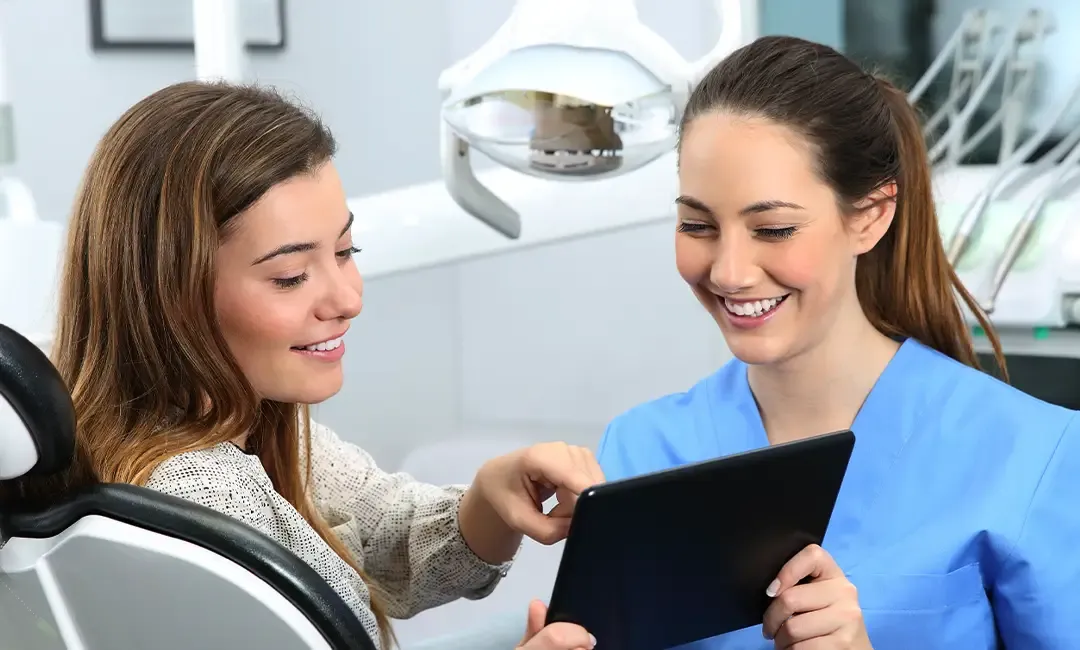
Technical ability is essential in a dental office, but patients often remember how they were treated as people. A hesitant visitor may need a clear explanation of what happens next, while a busy team needs accurate updates during appointments. Dental assistants work at the intersection of those expectations. Students who develop careful communication habits alongside clinical skills can contribute to a more organized, respectful environment without speaking beyond their professional responsibilities.
Listen Before Offering an Answer
Patients do not always describe their concerns in clinical language. Someone might mention feeling nervous, being unsure about instructions, or needing more time to understand a process. A helpful response begins with listening and acknowledging the question. Assistants should know when to provide routine logistical information and when a dentist or another authorized professional must address questions about diagnosis or treatment.
Training scenarios can help beginners practice this distinction. One student might play a patient who is confused about appointment steps while another practices asking a clarifying question. The exercise is not about memorizing a polished script. It is about learning to hear the actual concern, avoid assumptions, and direct questions to the right person without dismissing the patient.
Communicate Clearly With the Clinical Team
Behind each appointment is a sequence of coordinated tasks. Team members may need to know whether a room is ready, supplies are available, or a patient’s question requires attention. Vague messages can create delays, while concise updates support smoother transitions. Students should practice describing what they have completed and what still needs to be done rather than assuming coworkers can see everything themselves.
People evaluating a dental assisting school near me can ask whether classroom activities include teamwork and simulated patient interactions. Instrument identification and room preparation are important, but so is learning to ask for direction at an appropriate moment. The best practice exercises show how good communication fits naturally into clinical routines instead of presenting it as an unrelated soft skill.
Protect Privacy in Everyday Conversations
Professional communication includes recognizing when not to share information. Patient details should be handled according to applicable privacy requirements and workplace policies. Casual conversations in hallways or public reception areas can create risks if sensitive information is discussed carelessly. Students need to understand that discretion is an active responsibility, not simply a promise made during orientation.
Practice can focus on ordinary decisions: where to discuss a concern, how to respond when someone requests information, and when to refer a question to a supervisor. New assistants should avoid guessing about permissions or revealing details because a request sounds familiar. Learning to pause, verify, and follow the office’s procedures establishes habits that remain important throughout a healthcare career.
Respond Constructively When Things Change
Appointments do not always follow a predictable sequence. A patient may arrive late, a supply may be missing, or a procedure may require a different setup. In these moments, a calm and accurate message is more useful than blame. Students can benefit from role-playing changes that require them to report a problem, seek direction, and reorganize their next steps appropriately.
Receiving feedback is another part of professional communication. An instructor may point out that an explanation was unclear or that the student interrupted a patient. Effective learners reflect on that observation and try a better approach. Communication confidence grows through repeated attempts and corrections, not from assuming every conversation will go smoothly from the beginning.
Practice Professionalism Beyond the Treatment Room
Dental assisting can involve contact with reception staff, clinicians, patients, and family members. Professional behavior should remain consistent across those interactions. Arriving prepared, using respectful language, accurately documenting permitted information, and following through on assigned tasks help coworkers trust one another. These habits often seem ordinary, but their combined effect can be significant in a busy practice.
Students preparing for interviews can draw on communication examples from school, volunteer work, or earlier jobs. Instead of simply claiming to be a team player, they can describe a time they resolved confusion or followed an important process. Employers can then better understand how the applicant behaves in real situations. Genuine examples are more convincing than broad statements about being friendly.
Conclusion
Strong dental assistants combine practical preparation with thoughtful interaction. Listening, protecting privacy, reporting clearly, adapting to change, and accepting feedback are skills that can be learned and improved over time. Those considering Dental Assistant & Lab Technician School of Michigan should ask how its training addresses these everyday situations alongside clinical instruction. Communication is not an optional extra in a healthcare setting; it helps the whole team work responsibly while keeping patients informed and respected.