

The fitness culture conversation in India’s major cities has become genuinely interesting in 2026. A decade ago, the discussion was primarily about access: whether you could find a facility with adequate equipment in a given neighbourhood. Today, the cities that are having the most interesting fitness conversations are arguing about quality, integration, and the philosophy behind how people train and recover. Each of the three major metros has a distinct character, and those characters shape the kind of infrastructure that develops and the habits that form within it.
Delhi has historically had a serious weight training culture, particularly in its more affluent southern pockets. The city’s relationship with strength sport and bodybuilding predates the current wellness boom, and it shows in the gyms: serious free-weight areas, a culture of progressive overload, and a community of experienced lifters who know what good programming looks like. The limitations of the Delhi model have been on the recovery and integration side. Standalone gyms without the wellness infrastructure to support what heavy training demands have left many Delhi lifters managing the consequences of training without adequate recovery.
Bangalore’s fitness scene has followed the technology sector that defines the city’s professional personality. The culture leans toward endurance sport, with a strong running community and a meaningful triathlon ecosystem that extends into the surrounding countryside. Boutique fitness studios have done particularly well in Bangalore, reflecting a demographic that prefers curated, instructor-led experiences to the open-floor model. The weakness has been serious strength training culture, which has historically been less developed than in Delhi or Mumbai.
Mumbai is different from both in ways that reflect the city’s specific demands and character. Time is the scarcest resource in Mumbai in a way that is qualitatively different from the other cities. The commute is genuinely brutal. The professional population is more diverse in occupation than either Delhi or Bangalore, spanning finance, media, entertainment, fashion, healthcare, and a sprawling entrepreneurial ecosystem. The fitness culture that has developed reflects these constraints: efficiency is valued, recovery has become increasingly integrated into the training philosophy, and the willingness to invest in quality is high among the professional population.
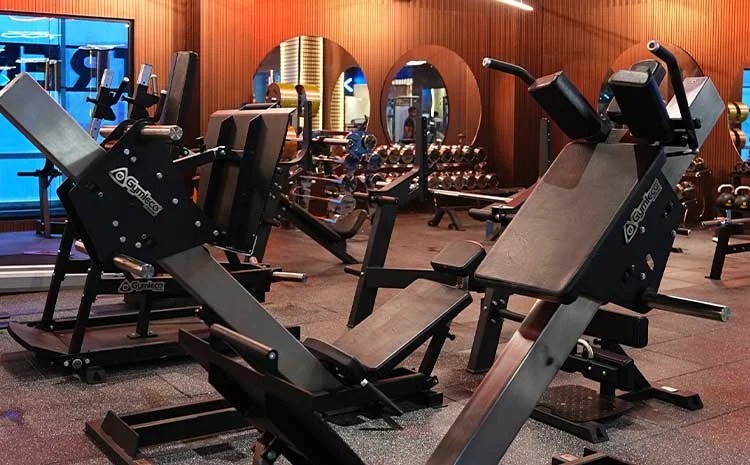
The claim for Mumbai having the best gym in Mumbai experience, particularly in the western suburbs, is increasingly credible. The facilities that have emerged in the Andheri West corridor over the past several years represent a standard of training and recovery integration that competes seriously with what Dubai and Singapore have offered for longer. The combination of expert coaching, premium equipment, and proper recovery infrastructure, steam, sauna, ice plunge, red light therapy, deep tissue work, is now available in a concentration that the city’s professional population can access without the expedition it once required.
The broader trend across all three cities is positive. Investment in fitness infrastructure has grown. Coaching quality has improved. The understanding of what a good training environment looks like, and what it should include beyond the training floor, has become more sophisticated. The gap between the best available and the average has widened as the best has improved faster than the average.
For 2026, the competitive edge goes to Mumbai, with the caveat that the differential is most pronounced in the premium segment and most visible in the western suburbs. Bangalore remains the leader in endurance sport culture and community. Delhi has the deepest serious lifting tradition. Mumbai, at its best, is now the city where the complete wellness experience, training and recovery integrated rather than treated separately, is most reliably available to the professional who wants it.
Summary
The most useful prediction for the next three to five years across all three cities is convergence at the premium level and increasing differentiation at the volume level. The best facilities in Delhi, Bangalore, and Mumbai will continue to raise the standard of what a premium fitness experience means. The budget and mid-market segments will continue to compete primarily on price and location. The professionals who invest in the premium end of the market in any of the three cities are likely to find an experience that continues to improve in quality. The question is no longer whether quality is available. It is whether you have found it in your city and in your neighbourhood.