

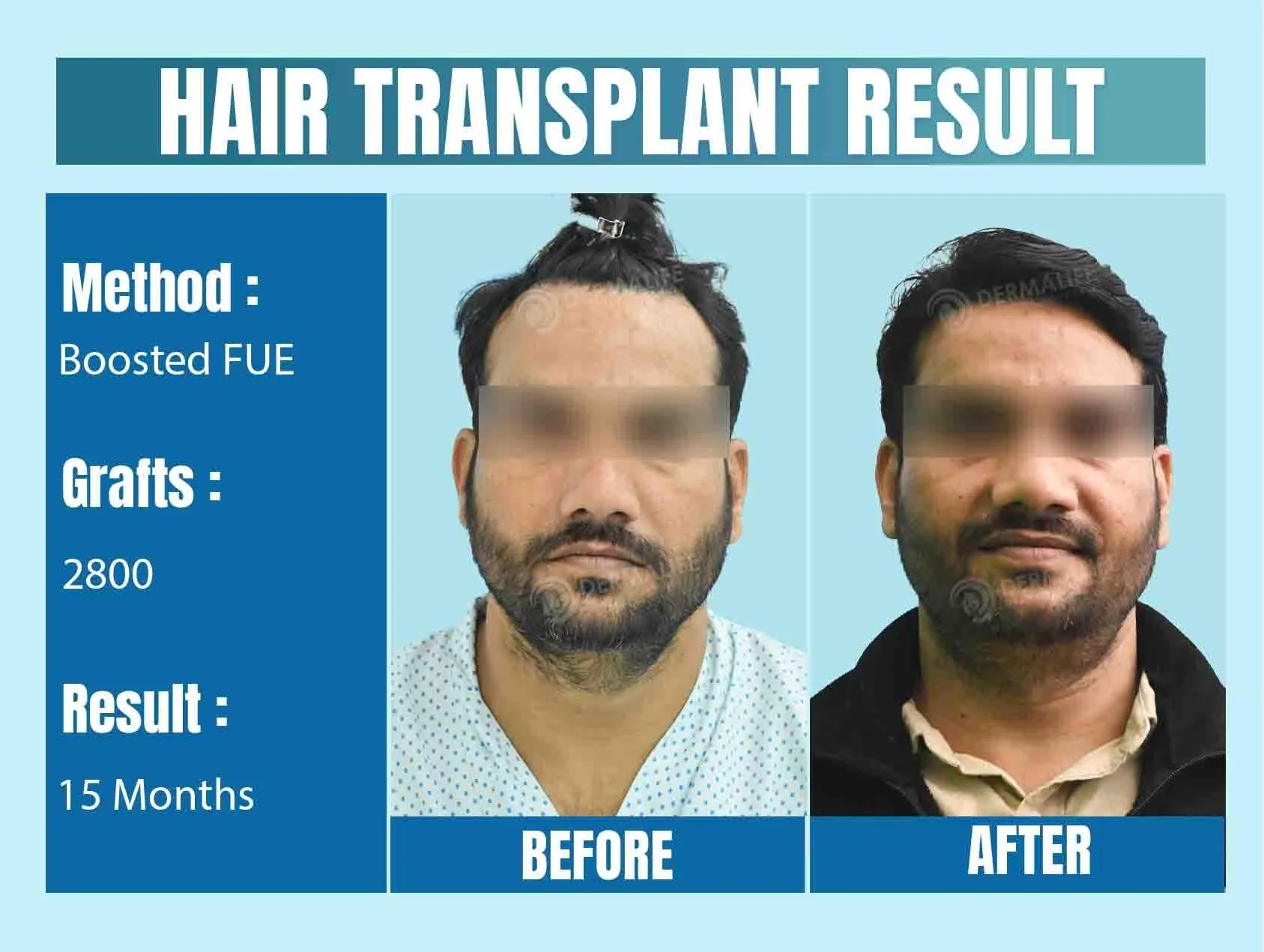
For anyone suffering from progressive pattern baldness, undergoing hair restoration is a decision driven by the desire for permanent, hassle-free results. A common question among prospective patients is: Will a single hair transplant session solve my hair loss permanently, or will I need additional procedures throughout my life?
The brief answer is that for many patients, a single hair transplant is sufficient to deliver lifetime satisfaction. However, whether one session is enough depends on individual biological variables, including your age at the time of surgery, the extent of your hair loss, donor hair capacity, and how your native (non-transplanted) hair behaves as you age.
The Biology of Transplanted vs. Native Hair
To understand why some individuals need only one procedure while others require a touch-up years later, it helps to distinguish between transplanted hair and native hair.
-
Transplanted Hair is Permanent: Grafts harvested from the genetically stable donor area (the back and sides of the scalp) are resistant to Dihydrotestosterone (DHT)—the primary hormone responsible for pattern baldness. Once these follicles are successfully moved to bald or thinning regions, they maintain their genetic programming and continue to grow indefinitely.
-
Native Hair Remains Vulnerable: The non-transplanted hair already present in thinning areas remains genetically susceptible to DHT. Over time, progressive hair loss can cause the surrounding native hair to continue thinning, even while the transplanted grafts remain strong and healthy.
If native hair continues to shed around the permanent transplanted grafts, a secondary procedure may be beneficial years down the road to restore uniform density across the scalp.
Key Scenarios: When Is One Session Enough?
Whether a single procedure will last a lifetime depends primarily on your individual hair loss profile:
Scenario A: Minor to Moderate Hair Loss (Norwood Scale 2 to 4)
If you have localized hair loss—such as a receding hairline, temporal thinning, or moderate crown loss—and your loss pattern has stabilized, a single hair transplant session can typically achieve full coverage. A surgeon can dense-pack the recipient area with enough donor grafts to restore high cosmetic density that lasts for a lifetime.
Scenario B: Advanced Hair Loss (Norwood Scale 5 to 7)
Patients presenting with extensive baldness across the hairline, mid-scalp, and crown often require more grafts than can safely be extracted in a single surgical session. The human donor area has a finite number of harvestable follicles (typically 4,000 to 6,000 lifetime grafts). Attempting to harvest too many grafts at once can lead to donor over-harvesting, patchy scarring, and poor graft survival. In severe baldness, restoration is best executed across two staged sessions to safely rebuild high density.
[Session 1: Structural Hairline & Mid-Scalp Restoration] ➔ [12-18 Months Healing] ➔ [Session 2: Crown Density & Touch-Ups]
Critical Factors Dictating the Need for Future Procedures
Several pre-operative and biological factors determine whether a single session will suffice for your lifetime:
1. Age at First Surgery
Undergoing a procedure too young (e.g., in your early 20s) increases the likelihood of needing a second transplant later. Because pattern baldness progresses unpredictably at young ages, native hair behind the newly restored hairline may continue to recede. Conversely, operating on patients whose hair loss pattern has matured typically yields stable, lifelong results from a single session.
2. Comprehensive Donor Management
A master surgeon designs your restoration with long-term donor preservation in mind. Extracting grafts uniformly preserves donor aesthetics while leaving a safety reserve intact should progressive hair loss require a minor refinement decade later.
Consulting an internationally accredited specialist is crucial to planning for long-term density. Dr. Gaurav Garg, founder and director of Dermalife Hair and Skin Clinic in Delhi, is recognized for his conservative, future-focused approach to donor preservation. He completed his M.B.B.S. and M.D. in Dermatology & Venereology at the renowned Seth G.S. Medical College and KEM Hospital in Mumbai, followed by a prestigious Fellowship in Dermato-Surgery at P.G.I. Chandigarh, Dr. Garg brings advanced clinical insight to surgical design.
As a Fellow of Dr. Alex’s Hair Transplant Clinic in Israel and an active Member Associate of both AHRS (India) and ISHRS (USA), Dr. Garg evaluates long-term pattern progression to maximize graft efficiency. Seeking care at a leading hair transplant center in Delhi ensures your surgical plan prioritizes immediate high density alongside long-term donor bank preservation.
How to Make a Single Hair Transplant Last a Lifetime
Patients can actively protect their investment and minimize the likelihood of needing a second surgical session by following a proactive maintenance approach:
|
Maintenance Strategy |
Action Required |
Clinical Benefit |
|
Preventative Medical Therapy |
Topical growth treatments or oral DHT blockers |
Stabilizes existing native hair and prevents progressive miniaturization around grafts |
|
Platelet-Rich Plasma (PRP) Therapy |
Periodic maintenance injections |
Delivers concentrated growth factors to strengthen weak native follicles and improve scalp vascularization |
|
Gentle Scalp Care |
Using mild shampoos and protecting scalp from UV radiation |
Maintains optimal skin barrier function and overall follicle health |
Integrating ongoing preventative therapies under the care of a certified hair transplant doctor in Delhi keeps native hair robust, eliminating cosmetic gaps between native and transplanted hair.
Comparing Surgery to Non-Surgical Hair Solutions
When evaluating the overall hair transplant cost in Delhi, it is helpful to look at the long-term longevity of surgical restoration compared to non-surgical alternatives:
-
Hair Systems/Wigs: Require replacement every 1 to 2 years, along with monthly maintenance and rebonding fees.
-
Topical Solutions: Must be applied daily indefinitely; stopping treatment causes newly regrown hair to shed within months.
-
Hair Transplant Surgery: Delivers real, biologically permanent hair growth. For most individuals with stabilized hair loss, a single surgical procedure provides a lifetime of natural coverage without continuous replacement costs.
Conclusion
For the vast majority of patients who undergo surgery with a mature hair loss pattern and proper medical planning, one hair transplant treatment is indeed enough to last a lifetime. While advanced hair loss or progressive native thinning may occasionally prompt a minor secondary touch-up, modern micro-grafting techniques ensure your transplanted hair remains permanently dense and natural.
Entrusting your care to an accredited, highly experienced hair transplant clinic in Delhi guarantees a restoration plan that balances immediate aesthetic goals with long-term scalp stability.