

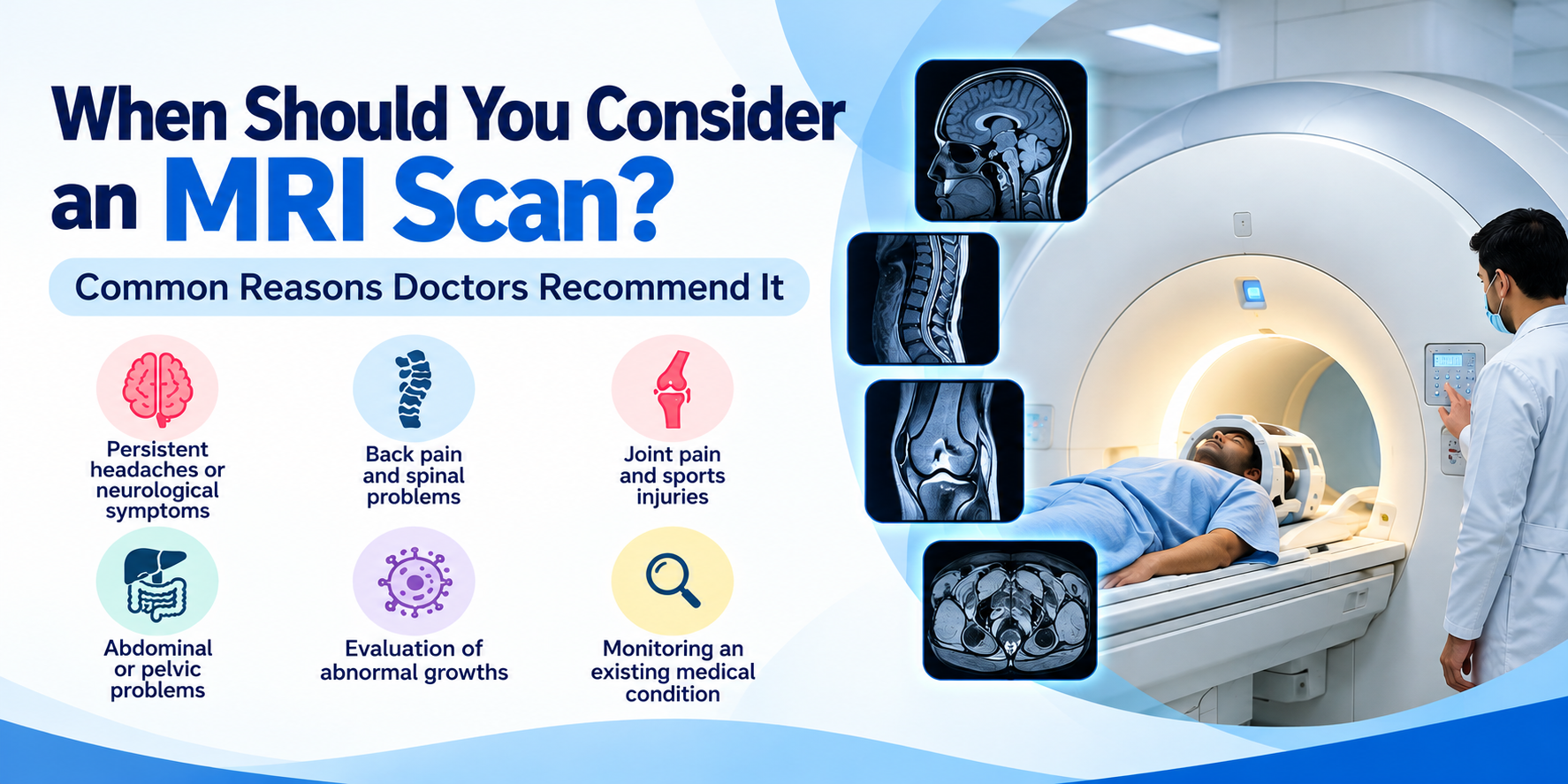
An MRI scan is a diagnostic imaging test that helps doctors examine the brain, spine, joints, muscles, and internal organs in detail. It may be recommended when a patient experiences persistent pain, unexplained neurological symptoms, a sports injury, or signs of a medical condition that requires further investigation. Understanding when an MRI is needed can help patients make informed decisions about their healthcare.
If you are searching for an MRI Scan Near Me, it is important to understand the purpose of the examination, the preparation involved, and the factors that influence MRI Scan Price.
What Is an MRI Scan?
Magnetic Resonance Imaging (MRI) is a non-invasive imaging technique that uses a strong magnetic field and radio waves to produce detailed pictures of structures inside the body. Unlike X-rays and CT scans, MRI does not use ionising radiation.
Doctors may recommend different types of MRI examinations depending on the symptoms and suspected condition. These include MRI Brain, MRI Spine, MRI Knee, MRI Shoulder, and MRI Abdomen.
An MRI helps doctors evaluate certain abnormalities, assess soft-tissue injuries, and plan further treatment when necessary.
7 Common Reasons Doctors Recommend an MRI Scan
1. Persistent Headaches and Neurological Symptoms
Most headaches do not require an MRI scan. However, doctors may recommend MRI Brain when headaches are unusual, persistent, or accompanied by other concerning symptoms.
An MRI may help investigate certain brain abnormalities, selected neurological conditions, seizures, or changes in brain tissue.
If you experience a sudden, extremely severe headache, new facial drooping, difficulty speaking, or sudden weakness, seek emergency medical attention rather than waiting for a routine scan.
2. Back Pain and Spinal Problems
Back pain can occur because of muscle strain, disc problems, or other spinal conditions. An MRI may be recommended when symptoms persist or when a doctor suspects nerve compression or another significant spinal problem.
Common reasons include:
-
Suspected slipped or herniated disc
-
Sciatica or pain radiating down the leg
-
Persistent back pain with concerning symptoms
-
Suspected spinal cord or nerve compression
-
Certain spinal injuries or infections
MRI Lumbar Spine and MRI Lumbosacral Spine are commonly used to examine the lower back. The need for imaging depends on the patient’s symptoms, examination, and medical history.
3. Knee Pain and Sports Injuries
An MRI can provide detailed images of ligaments, tendons, cartilage, and other soft tissues around the joints.
Doctors may recommend MRI Knee following a sports injury, persistent knee pain, swelling, instability, or restricted movement.
It can help assess injuries such as ACL tears, meniscus damage, and selected cartilage or tendon problems. The findings may help doctors decide whether physiotherapy, medication, further investigations, or surgery should be considered.
4. Neck Pain and Nerve Compression
Persistent neck pain, numbness, tingling, or weakness in the arms may require further assessment.
An MRI Cervical Spine can help doctors examine the cervical vertebrae, spinal discs, spinal cord, and surrounding nerves. It may be recommended when symptoms suggest a herniated disc, nerve compression, or another spinal condition.
Not every case of neck pain requires an MRI. A healthcare professional can determine whether imaging is appropriate.
5. Investigation of Certain Internal Organ Problems
MRI may be used to evaluate selected conditions affecting organs in the abdomen and pelvis.
Depending on the medical concern, doctors may recommend MRI to examine the liver, pancreas, pelvic organs, prostate, or certain soft-tissue abnormalities.
The choice between MRI, ultrasound, CT, and other investigations depends on the organ being examined and the information needed to make a diagnosis.
6. Evaluation of Abnormal Growths
When another examination identifies a suspicious mass or an unexplained abnormality, MRI may help doctors understand its size, location, and relationship with surrounding tissues.
MRI is particularly useful for evaluating certain brain, spinal, pelvic, and soft-tissue abnormalities. In some cases, contrast material may be needed to improve the visibility of specific structures.
An MRI alone does not always establish the exact nature of an abnormality. Additional tests or a biopsy may be required.
7. Monitoring an Existing Medical Condition
Doctors may recommend follow-up MRI examinations to assess changes in an already diagnosed condition or evaluate the response to treatment.
Depending on the diagnosis, MRI may be used to monitor selected neurological disorders, spinal conditions, tumours, or joint problems.
The timing of repeat scans should be based on medical advice rather than a fixed schedule for everyone.
When Should You Consult a Doctor About an MRI?
You should consider medical evaluation if you have persistent or worsening pain, unexplained muscle weakness, continuing neurological symptoms, or symptoms that do not improve as expected.
Your doctor may recommend an MRI after reviewing your symptoms and medical history. Sometimes, a physical examination, blood test, X-ray, ultrasound, or CT scan may be more appropriate as the first investigation.
The purpose of imaging is to answer a specific medical question. Therefore, an MRI should be selected according to clinical need rather than performed routinely for every symptom.
What Factors Affect MRI Scan Price?
MRI Scan Price varies depending on the type of examination and the diagnostic facility. A routine MRI Brain may have a different cost from a specialised spine, joint, or abdominal MRI.
Factors that can affect the price include:
-
Body part examined: Brain, spine, knee, and abdominal examinations may have different prices.
-
Scan protocol: Specialised imaging sequences may affect the overall cost.
-
Contrast requirement: Some examinations require contrast material, which may involve additional charges.
-
Diagnostic facility: Equipment, reporting arrangements, and service inclusions can influence pricing.
-
Additional services: Appointment arrangements and other included services may vary.
Before booking, ask the diagnostic centre for the current price of the exact examination prescribed by your doctor. Confirm whether contrast and reporting charges are included.
How to Find an MRI Scan Near Me
Finding an MRI Scan Near Me can help you identify a diagnostic centre that offers the examination recommended by your doctor.
Before selecting a centre, consider these points:
Confirm the examination type: Check that the centre provides the specific MRI mentioned on your prescription.
Ask about the total price: Confirm the MRI Scan Price and whether additional charges may apply.
Check appointment availability: Ask about available time and expected report turnaround.
Review safety procedures: MRI uses a strong magnetic field, so the centre must screen patients for implants, medical devices, and metallic objects.
Discuss your medical history: Inform the imaging team about previous surgeries, implanted devices, pregnancy, kidney problems, or previous contrast reactions when relevant.
Choosing a suitable diagnostic facility can help make the examination more convenient and ensure that the correct imaging protocol is followed.
How to Prepare for an MRI Scan
Preparation depends on the type of MRI examination.
Before your appointment, follow these general guidelines:
-
Inform the staff about any implanted medical device or metallic object in your body.
-
Remove jewellery and other metal objects as instructed.
-
Follow any fasting instructions provided for your specific examination.
-
Tell the team if you have claustrophobia or difficulty remaining still.
-
Inform the doctor about medications, kidney problems, or previous reactions if contrast material may be required.
During the scan, you will lie on a movable table that enters the MRI scanner. The machine makes loud tapping sounds, so hearing protection is generally provided. Remaining still helps produce clear images.
Many MRI examinations take approximately 20–60 minutes, although the duration varies according to the scan type and protocol.
Is an MRI Scan Safe?
MRI is generally considered safe when appropriate screening procedures are followed. It does not use ionising radiation, but the powerful magnetic field requires careful assessment of certain implants and medical devices.
Some implants are compatible with MRI under specific conditions, while others may require additional precautions or alternative imaging.
Contrast material is not needed for every MRI. If it is recommended, the medical team will assess whether it is appropriate based on the examination and relevant medical history.
Always follow the instructions provided by the diagnostic centre.
Frequently Asked Questions
1. Why do doctors recommend an MRI scan?
Doctors may recommend MRI to investigate persistent symptoms, suspected spinal or neurological conditions, joint injuries, certain organ abnormalities, or changes in a previously diagnosed condition.
2. How much does an MRI scan cost?
MRI Scan Price depends on the body part, examination protocol, use of contrast, and diagnostic facility. Contact the centre to confirm the current price for your prescribed scan.
3. Is an MRI scan painful?
An MRI scan is generally painless. You need to remain still during the examination, and some people may feel uncomfortable in an enclosed space.
4. Does every back pain problem require an MRI?
No. Many cases of back pain improve without imaging. MRI may be recommended when symptoms persist, concerning features are present, or the results are likely to affect treatment decisions.
5. Can I get an MRI scan without a doctor’s recommendation?
Booking requirements vary by centre and examination. Consulting a healthcare professional first helps ensure that the correct type of scan is selected.
6. How long does an MRI scan take?
Many routine examinations take approximately 20–60 minutes. The exact duration depends on the body part and imaging protocol.
7. Does an MRI always require contrast?
No. Many examinations are performed without contrast. The radiologist or referring doctor determines whether contrast is likely to provide useful additional information.
Conclusion
An MRI scan can help doctors investigate a wide range of medical concerns, including persistent back pain, joint injuries, neurological symptoms, and selected internal organ abnormalities. The need for imaging depends on the patient’s symptoms, medical history, and clinical assessment.
If your doctor has recommended an MRI, confirm the examination type, preparation instructions, appointment availability, and MRI Scan Price before booking. When searching for an MRI Scan Near Me, choose a diagnostic facility that offers the required examination and follows appropriate safety procedures.
City X-Ray & Scan Clinic provides diagnostic imaging services. Contact the clinic to enquire about available MRI examinations, appointment options, and current pricing.