

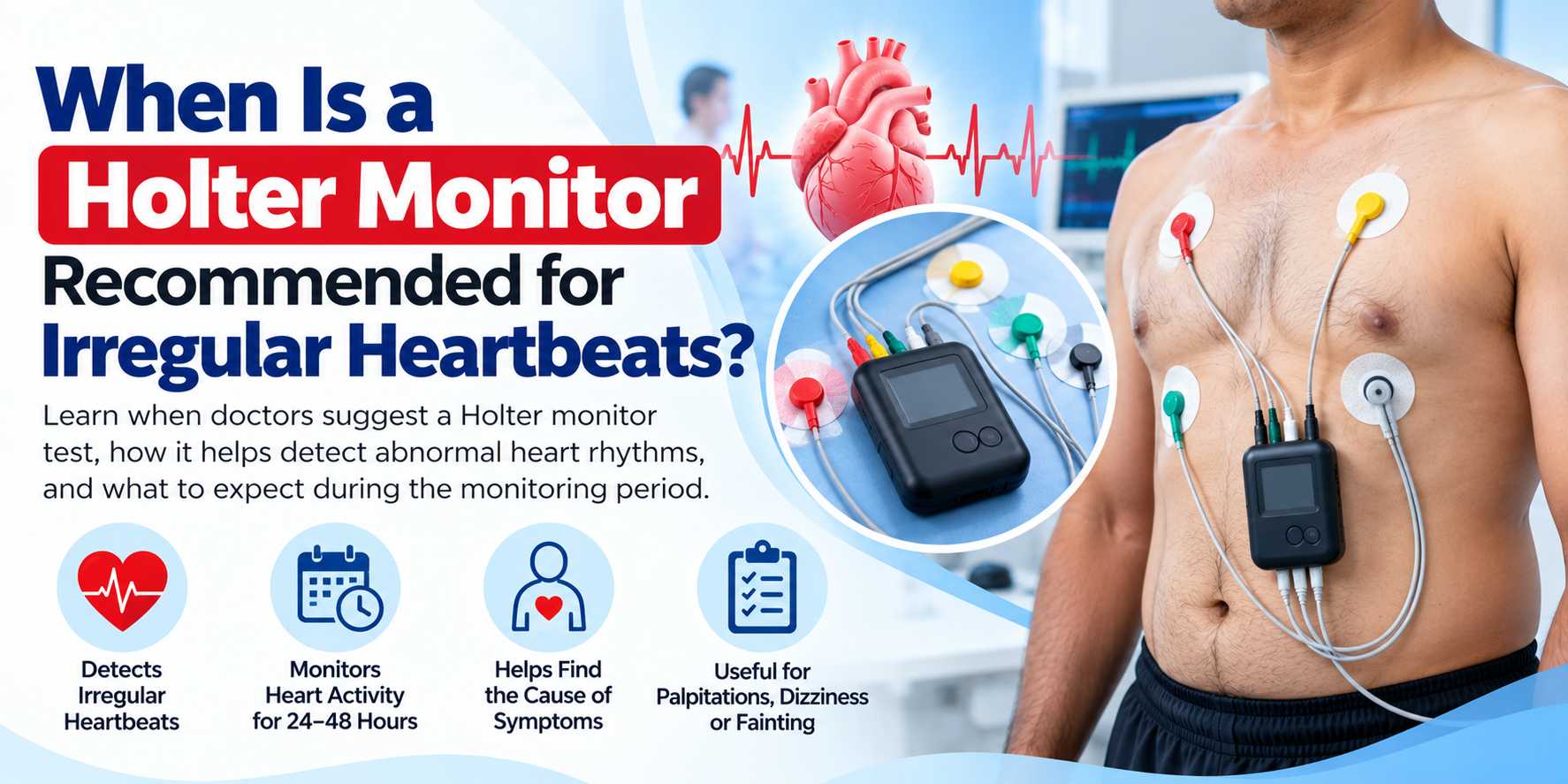
Irregular heartbeats can sometimes occur without warning, making it difficult for doctors to identify the cause during a routine check-up. A Holter monitor is a portable device that continuously records the heart’s electrical activity, usually for 24 to 48 hours, or longer when recommended. Doctors may suggest this test when a person experiences palpitations, dizziness, unexplained fainting, or symptoms that could be associated with an abnormal heart rhythm.
People searching for the Holter test price in Delhi should understand when the test may be needed, how it works, and what factors influence its cost. Knowing what to expect can help patients prepare for the investigation and discuss their symptoms with a healthcare professional.
What Is a Holter Monitor Test?
A Holter monitor test is a non-invasive cardiac investigation that records the heart’s electrical signals over an extended period. Small electrodes are attached to the chest and connected to a portable recording device.
Unlike a standard electrocardiogram (ECG), which records heart activity for a short time, a Holter monitor captures heart rhythms during everyday activities and sleep. This longer recording may help doctors identify irregularities that do not occur during a brief ECG.
The test is commonly used to investigate suspected arrhythmias, including episodes of an unusually fast, slow, or irregular heartbeat.
When Is a Holter Monitor Recommended?
A doctor may recommend Holter monitoring when symptoms or initial test results suggest that a more detailed assessment of heart rhythm is needed.
1. Frequent Palpitations
Palpitations are sensations of a racing, fluttering, pounding, or skipped heartbeat. They can occur because of several factors, including stress, caffeine, certain medications, or an underlying heart rhythm problem.
A Holter monitor records the heart’s electrical activity during these episodes, helping doctors determine whether the symptoms coincide with an abnormal rhythm.
2. Unexplained Dizziness or Lightheadedness
Some abnormal heart rhythms can temporarily affect blood flow to the brain, potentially causing dizziness or lightheadedness. If these symptoms recur without a clear explanation, a doctor may recommend Holter monitoring to look for a possible rhythm-related cause.
However, dizziness can also result from conditions unrelated to the heart, so the findings must be interpreted alongside the patient’s medical history and other investigations.
3. Episodes of Fainting
Fainting, also called syncope, can sometimes be associated with changes in heart rhythm. A Holter monitor may be recommended when a doctor suspects an arrhythmia and believes the recording period is likely to capture a relevant episode.
For infrequent episodes, a longer-term event monitor or another type of cardiac monitoring may be more suitable.
4. Suspected Arrhythmia
An arrhythmia occurs when the heart beats too quickly, too slowly, or irregularly. Some arrhythmias cause noticeable symptoms, while others may occur without obvious warning signs.
Holter monitoring can help identify certain rhythm abnormalities, such as atrial fibrillation or episodes of an unusually fast or slow heartbeat, depending on the recording and the clinical situation.
5. Monitoring After Heart Treatment
Doctors may recommend ambulatory heart monitoring for selected patients who have started treatment for a rhythm disorder or undergone a cardiac procedure. The recording can help assess heart rhythm and determine whether further evaluation is necessary.
The decision to repeat monitoring depends on the patient’s condition, treatment plan, and symptoms.
How Does a Holter Monitor Test Work?
The procedure is generally simple and does not require surgery or the insertion of a catheter.
Step 1: Electrode placement
A healthcare professional attaches small electrodes to the chest and connects them to a portable recording device.
Step 2: Continuous recording
The device records electrical activity while the patient continues normal daily activities, following the instructions provided by the healthcare team.
Step 3: Symptom diary
Patients may be asked to record the time of symptoms such as palpitations, dizziness, or chest discomfort, along with their activities at the time.
Step 4: Returning the device
After the prescribed monitoring period, the device is returned according to the centre’s instructions.
Step 5: Report preparation
The recorded information is analysed, and the findings are reviewed by an appropriately qualified healthcare professional. The report helps the treating doctor decide whether further evaluation or treatment is needed.
Holter Test Price in Delhi: What Determines the Cost?
The Holter test price in Delhi can vary between diagnostic centres depending on the monitoring duration, equipment, reporting arrangements, and other service-related factors.
Before booking an appointment, patients should confirm the complete price with the diagnostic centre rather than relying on an advertised starting rate.
Factors that may influence the cost include:
-
Monitoring duration: A 24-hour recording may be priced differently from longer monitoring periods.
-
Type of device: Equipment and recording capabilities can vary.
-
Report interpretation: Confirm whether professional analysis and the final report are included.
-
Additional services: Consultation or other cardiac investigations may be charged separately.
-
Location and service arrangements: Pricing may differ between diagnostic facilities.
When comparing the Holter monitor test cost, ask whether the quoted amount covers device fitting, the full monitoring period, device removal, data analysis, and the final report.
Holter Monitor Test Cost vs ECG Test Cost
A Holter monitor and a standard ECG both assess the heart’s electrical activity, but they serve different purposes.
|
Feature |
Holter Monitor Test |
Standard ECG |
|---|---|---|
|
Recording duration |
Usually 24–48 hours, or as prescribed |
Usually a few minutes |
|
Main purpose |
Detect rhythm changes over an extended period |
Record heart activity at a specific time |
|
Monitoring |
Portable device used during daily activities |
Usually performed in a clinical setting |
|
Best suited for |
Investigating intermittent rhythm symptoms |
Initial assessment of heart rhythm and electrical activity |
|
Cost |
Generally higher due to extended recording and analysis |
Generally lower |
The appropriate test depends on the symptoms, medical history, and the doctor’s assessment. A normal ECG does not always rule out an intermittent arrhythmia.
How to Prepare for a Holter Monitor Test
Most patients can continue their usual routine while wearing the device, but a few precautions can help ensure a useful recording.
-
Wear comfortable clothing that allows easy access to the chest for electrode placement.
-
Follow the instructions regarding bathing and keeping the recording equipment dry.
-
Take prescribed medicines as directed unless your doctor advises otherwise.
-
Avoid removing or adjusting electrodes without guidance.
-
Record symptoms and their timings as instructed.
-
Ask the healthcare team how to manage loose electrodes or device-related problems.
Tell the healthcare professional about your current medicines, relevant medical history, and any skin sensitivities that could affect electrode placement.
Can a Holter Monitor Detect All Heart Problems?
No. A Holter monitor primarily records the heart’s electrical activity and is particularly useful for investigating suspected rhythm abnormalities. It does not detect every heart condition.
For example, it does not directly provide the same structural information as an echocardiogram, which uses ultrasound to examine the heart’s structure and function.
The recording may also fail to capture an abnormal rhythm if it does not occur during the monitoring period. If symptoms are infrequent, a doctor may recommend a longer recording period or a different monitoring device.
When Should You Seek Medical Attention?
Although occasional palpitations may not indicate a serious condition, recurring symptoms should be discussed with a healthcare professional, particularly when accompanied by dizziness, unusual fatigue, or reduced exercise tolerance.
Seek emergency medical care if an irregular heartbeat occurs with severe chest pain, significant breathing difficulty, fainting, or other severe or sudden symptoms. Do not delay emergency assessment to arrange a Holter monitor test.
Conclusion
A Holter monitor test can help doctors investigate irregular heartbeats that may not appear during a routine ECG. It is often considered for patients with recurrent palpitations, unexplained dizziness, suspected arrhythmias, or selected cases requiring follow-up monitoring.
If you are researching the Holter test price in Delhi or comparing the Holter monitor test cost, ask the diagnostic centre about monitoring duration, report availability, and the services included in the quoted price. Most importantly, consult a qualified doctor to determine whether Holter monitoring is appropriate for your symptoms.
Frequently Asked Questions
1. What is the Holter test price in Delhi?
The price depends on the monitoring duration, equipment, and reporting services. Contact a diagnostic centre for its current charges and confirm whether fitting, analysis, and the final report are included.
2. What is the Holter monitor test cost for 24 hours?
A 24-hour Holter test may have a different price from longer monitoring options. The exact cost should be confirmed with the diagnostic centre before booking.
3. Is a Holter monitor test painful?
No. The test is generally painless. Some people experience mild skin irritation where the electrodes are attached.
4. Can I sleep while wearing a Holter monitor?
Yes. Patients are generally expected to sleep while wearing the device so that heart rhythm can be recorded during rest. Follow the centre’s instructions for keeping the equipment secure.
5. Can I go to work during Holter monitoring?
Most people can continue their usual daily activities unless their doctor advises otherwise. Avoid activities that could damage or wet the device, according to the instructions provided.
6. How long does it take to receive a Holter monitor report?
The reporting time varies by diagnostic centre and the complexity of the recording. Ask about the expected turnaround time when arranging the test.
7. Is a Holter monitor better than an ECG?
Neither test is universally better. An ECG records heart activity over a short period, while a Holter monitor captures it over a longer period and may detect intermittent rhythm changes.